How Do Noise Cancelling Headphones Work? Active vs Passive, Explained
- Sent
- Reading time
- 4 min
Noise cancelling headphones work in two ways at once. Passive isolation blocks sound physically with cushions, foam tips and a snug seal. Active noise cancelling, usually shortened to ANC, uses small microphones to listen to the noise around you, then plays a matching sound wave flipped upside down, so the two largely cancel each other before they reach your ear. That combination is why a good pair can turn the roar of a plane cabin into a faint hum.
Sound as waves
Sound travels as pressure waves: peaks and troughs of slightly squeezed and stretched air. When two waves meet, they combine. If a peak lines up with a peak, the result is louder. If a peak meets a trough of the same size, they flatten each other out. Physicists call this destructive interference, and it is the entire principle behind active noise cancelling.
How active noise cancelling works, step by step
- Listen. Microphones on the outside of each earcup or earbud pick up the surrounding noise. Many designs add a second microphone inside, close to the ear, to hear what is still getting through.
- Analyse. A small processor reads the shape of that incoming wave almost instantly.
- Invert. It generates an "anti-noise" signal: the same wave with peaks and troughs swapped.
- Mix. The anti-noise plays through the speaker alongside your music, podcast or silence.
- Correct. The inner microphone checks the result and the system keeps adjusting. Outside-only designs are called feedforward, inside-only designs feedback, and the combination hybrid.
Why ANC handles some sounds better than others
Active cancellation is strongest against steady, low-pitched sound: aircraft engines, train rumble, air conditioning, the hum of a fridge. Those waves are long and predictable, which gives the electronics time to match them. Sudden or higher-pitched sounds such as voices, a crying baby or clattering cutlery change too quickly to be cancelled fully. That is where passive isolation takes over, and why even premium headphones never create total silence.
Active vs passive noise cancelling
| Passive isolation | Active noise cancelling | |
|---|---|---|
| How it works | Physical barrier: cushions, foam or silicone tips, a tight seal | Microphones plus anti-noise from the speaker |
| Strongest against | Higher-pitched and sudden sounds | Low, constant rumble |
| Needs power? | No | Yes, it draws on the battery |
| Drawbacks | Can feel tight or warm over time | Some people notice a pressure sensation; adds cost |
The best results come from both working together. Over-ear headphones with worn cushions will struggle however advanced the electronics, and earbuds with the wrong size of tip leak sound in. Try every tip size in the box and pick the one that seals without discomfort.
Noise cancelling headphones for flying
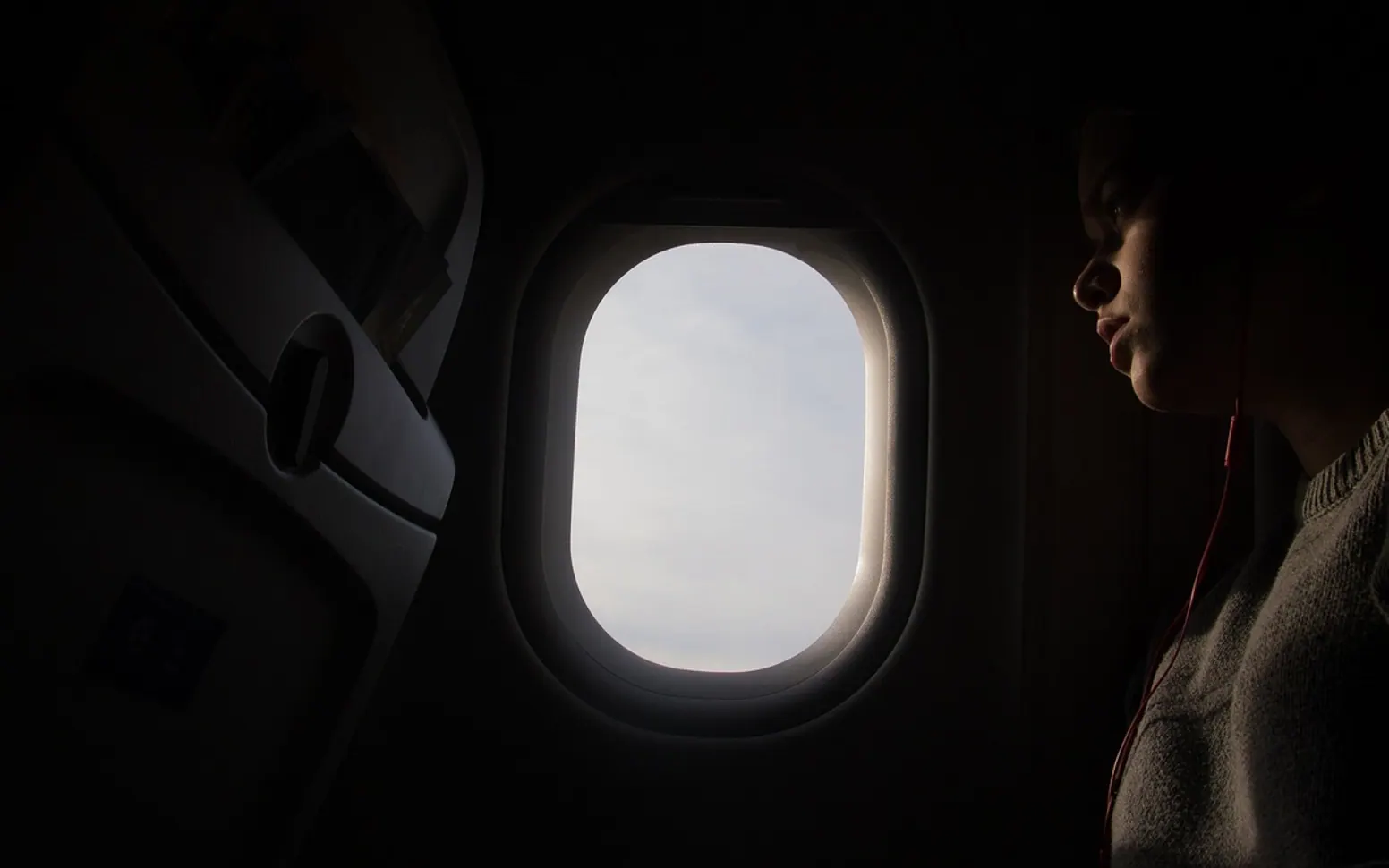
An aircraft cabin is almost the ideal case for ANC: loud, low and constant for hours on end. Reducing that background means you can listen at a lower volume, which is kinder to your hearing, and many travellers find long flights less draining. A few practical points:
- Charge them fully before leaving and pack the cable; many models still work in wired mode if the battery runs flat.
- Bring the two-pin flight adapter if one came in the box, so you can plug into the seat-back screen.
- Over-ear models are often comfier for sleeping upright; earbuds suit people who rest their head against the window.
- Use transparency or ambient mode to hear announcements without taking them off.
Quieter flights pair well with a sensible plan for the first days after landing, which our guide on how to beat jet lag sets out. If rest is the whole point of a trip, sleep tourism takes the idea further.
At home, too
ANC is handy well beyond travel. It softens a neighbour's washing machine, traffic outside a home office or the fan of a games console. For films and live matches, though, many people prefer sound from the room, so it pays to set up the screen properly as well; see our notes on the best TV settings for sports.
Things worth knowing
Is noise cancelling bad for your ears?
The anti-noise itself is not loud; it lowers what reaches the ear. The bigger benefit is that you no longer need to turn music up to hear it over the background. Anyone with ear pain, ringing or a change in hearing should speak to a doctor or a hearing specialist.
Why do some people feel pressure with ANC switched on?
Removing low-frequency sound can create a sensation similar to the ear pressure of a descending plane. For most people it is harmless, and many headphones let you lower the strength of the effect.
Should you use noise cancelling outdoors?
Take care near roads, on a bike and in crowds. Transparency mode keeps traffic, bells and warnings audible.
Across the sections
Don’t miss these


Something to add?
We read every message.