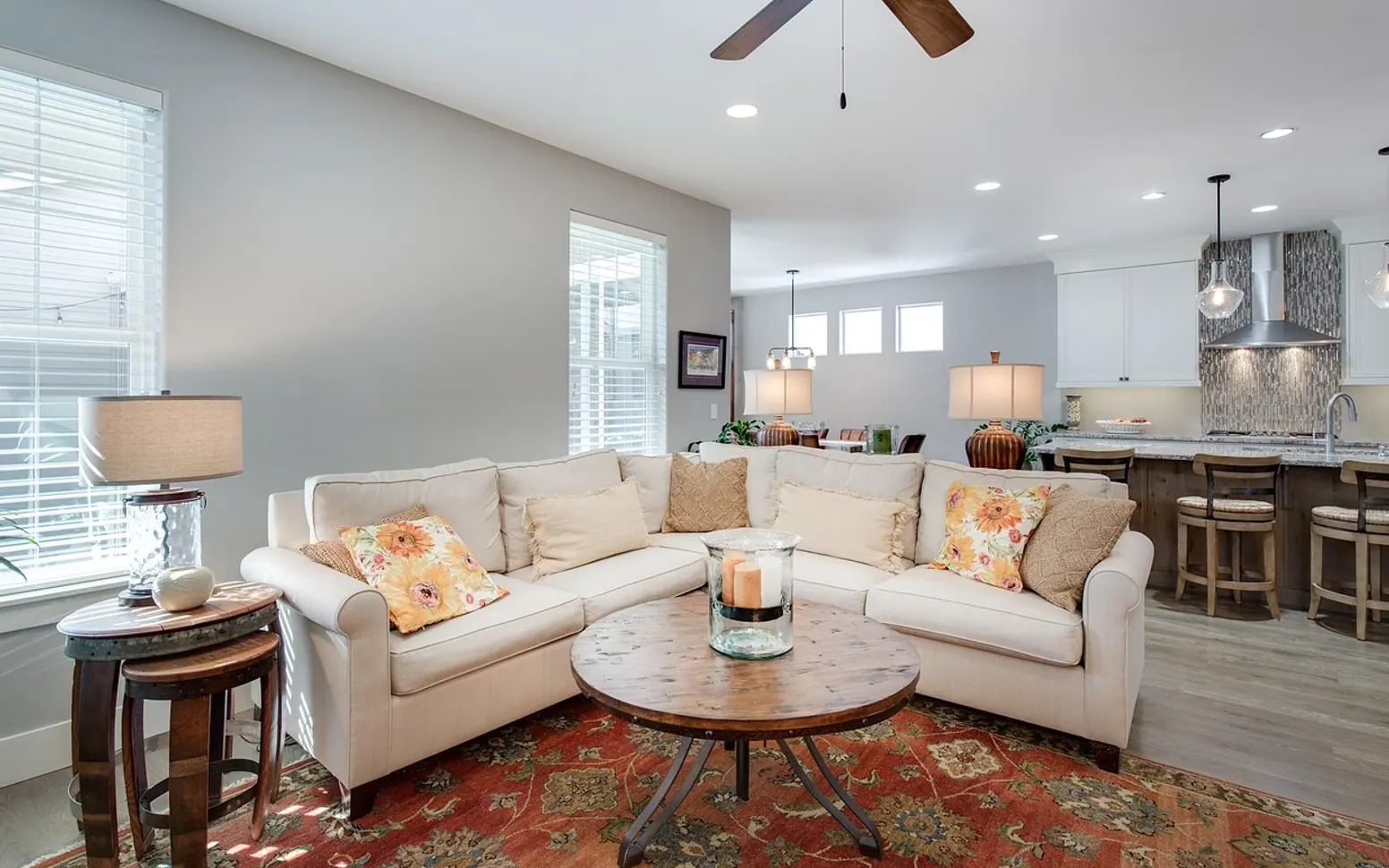
The living room asks more of its lighting than almost any other space. In a single day it can be a reading nook, a homework table, a cinema, a place to welcome guests and somewhere to doze on the sofa. A single bright fitting in the middle of the ceiling cannot do all of that well. The answer that designers and careful homeowners keep returning to is layering: several sources of light, each with its own job, that can be mixed to suit the moment.
The three layers
Ambient light: the base coat
Ambient or general light fills the room so you can move around safely and see faces clearly. It might come from a central pendant, a flush ceiling fitting, wall lights or a grid of recessed downlights. The aim is soft, even coverage without harsh shadows. Recessed fittings are popular in modern rooms because they keep ceilings clean and uncluttered; we looked at their look and feel in our piece on the aesthetic benefits of recessed lighting.
Task light: for the things you actually do
Task lighting is focused where you need detail: a floor lamp arching over the reading chair, a table lamp beside the sofa for knitting or puzzles, a desk lamp in the corner where the laptop lives. Position it to the side of the activity rather than directly behind your head, so your own shadow does not fall across the page.
Accent light: the personality
Accent lighting draws the eye to something you love: a painting, a shelf of travel finds, a textured wall or a large plant. Picture lights, small spotlights, LED strips inside shelving and uplighters tucked behind furniture all count. This layer is often what makes a room feel finished rather than merely lit.
A statement piece, if you want one
A striking fitting can sit across the layers, giving ambient light and acting as the room's centrepiece at the same time. Sculptural pendants and contemporary chandeliers have moved well beyond formal dining rooms, as we explored in the rise of modern chandeliers. Choose one on a dimmer so it can glow softly in the evening rather than dominating the room.
Warmth, brightness and control
- Colour temperature: warmer white light tends to feel relaxing in the evening, while a cooler, crisper white can suit daytime work. Mixing wildly different whites in one room usually looks uneven, so try to keep bulbs consistent within each layer.
- Dimmers: perhaps the single most useful upgrade. Being able to turn the ambient layer down changes the mood of the whole room.
- Separate switching: wiring or plugging each layer so it can be controlled independently gives you real flexibility. Smart plugs and smart bulbs can do this without rewiring.
- Bulb choice: check that bulbs match the fitting, especially with dimmers, as not every bulb dims smoothly.
Scenes for a typical day
| Moment | Layers to use |
|---|---|
| Grey morning | Ambient on, task lamp by the coffee spot |
| Afternoon guests | Daylight plus accent light on shelves or art |
| Reading or hobbies | Task lamp beside the chair, ambient dimmed |
| Film or match night | Soft light behind or beside the screen, everything else low |
| Winding down | Accent and one warm table lamp only |
Screens and glare
The television changes the lighting rules. Watching in total darkness can feel tiring for the eyes, while a lamp reflected in the screen is just as distracting. A gentle light behind the TV or at the side of the room, out of the screen's reflection, is usually the most comfortable compromise. Close curtains on windows that face the screen during daytime viewing, and keep the brightest lamp on the same wall as the television rather than opposite it.
Small rooms, rentals and tight budgets
You do not need an electrician to layer light. Plug-in wall lights, floor lamps, battery-powered picture lights and LED strips can transform a rented room and come with you when you move. In a compact space, lighting the corners and walls makes the room feel larger than a single bright point in the centre. Mirrors placed to catch a lamp's glow double its effect.
Safety first
Any new hard-wired fitting, dimmer switch or ceiling change should be handled by a qualified electrician who follows local regulations. Keep cables away from walkways, avoid overloading extension leads and check that lamps near curtains or fabric shades have suitable bulbs.
Start with one layer at a time
Sit in your living room this evening and notice where you actually spend time. Add a lamp where you read, a soft glow behind the screen and one small accent on something you love. Live with it for a week, then decide what the room still needs. Good lighting tends to grow gradually, and the room will tell you what is missing.
Across the sections
Don’t miss these




Something to add?
We read every message.