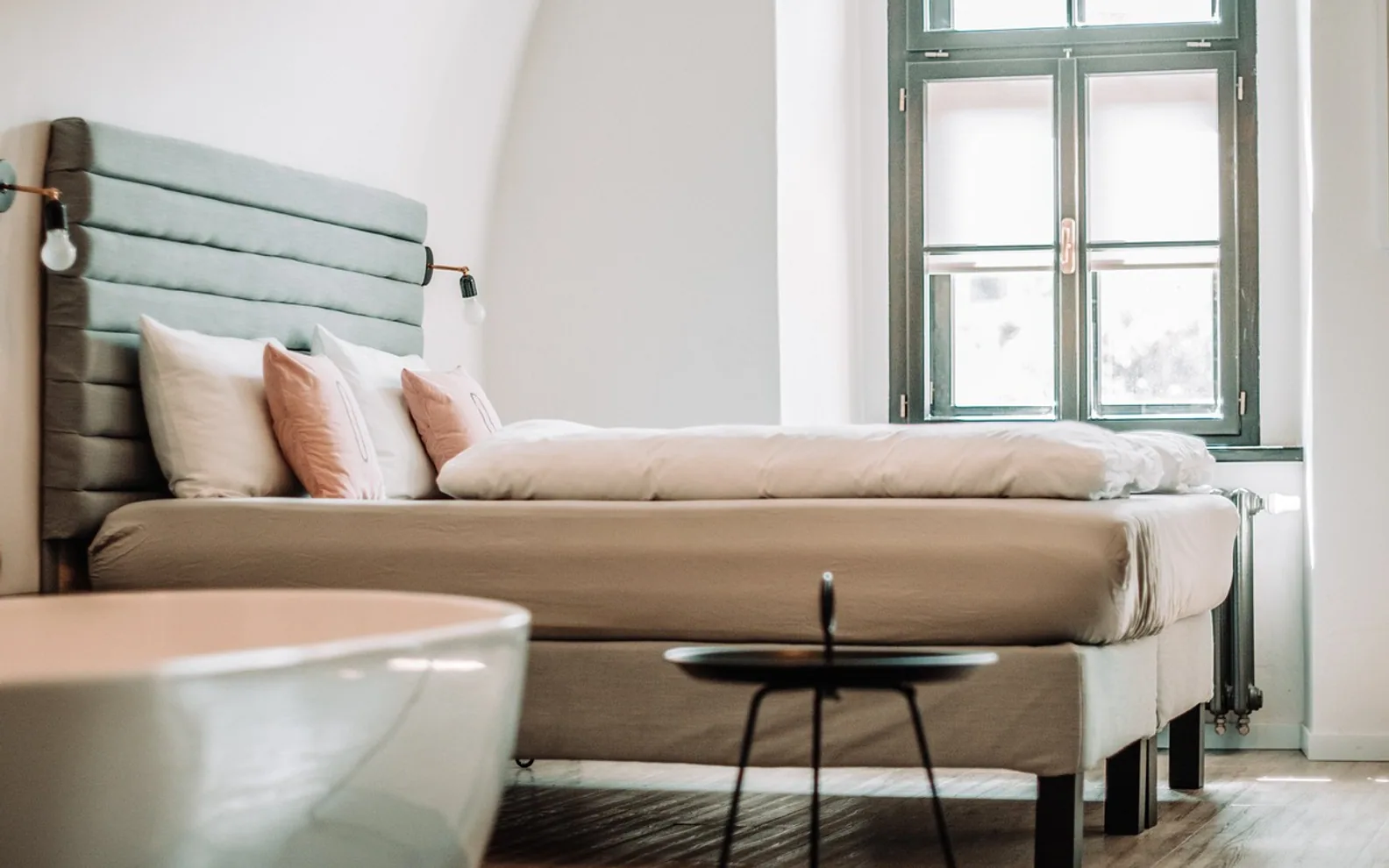
Travel days are strange for the body. You sit in a taxi, sit at the gate, sit on the plane, then sit on the edge of a hotel bed wondering why everything feels stiff. A full gym session is rarely realistic on the road, and the hotel gym, if there is one, may be a treadmill in a basement. The good news is that a useful workout needs little more than a towel and the strip of carpet between the bed and the desk.
The routine below uses only bodyweight. It is meant for people who are already reasonably active at home and want to keep the habit going while away. Move at your own pace, skip anything that does not feel right and, if you have a health condition, an injury or have not exercised for a while, check with a GP before starting something new.
Set up the space
- Clear a mat-sized patch. Push the luggage stand aside and lay a bath towel on the floor for grip and comfort.
- Use the furniture carefully. A sturdy desk or the bed frame can help with balance, but test it first. Avoid wheeled chairs entirely.
- Think about the room below. Hotels are rarely soundproof, so the plan avoids jumping. Quiet movements are kinder to the neighbours and just as useful.
- Keep water nearby. Hotel rooms are often warm and dry, especially after a flight.
Warm-up: five easy minutes
- March on the spot, swinging the arms loosely.
- Roll the shoulders forwards and backwards.
- Gentle hip circles with hands on the hips.
- Slow bodyweight squats to a comfortable depth.
- Reach both arms overhead, then fold forward softly with bent knees.
The main circuit
Do each exercise for a comfortable number of repetitions, rest briefly, then move to the next. Two or three rounds is plenty for most travel days. Stop well before you feel exhausted; the aim is to feel looser and more awake, not wiped out before dinner.
| Exercise | How to do it | Easier option |
|---|---|---|
| Squat | Feet hip-width apart, sit back as if onto a chair, stand tall | Sit down onto the bed edge and stand up again |
| Incline press-up | Hands on the desk edge, body in a straight line, lower and push away | Hands on the wall instead |
| Reverse lunge | Step one foot back, bend both knees, return to standing | Hold the desk for balance and take a shorter step |
| Glute bridge | Lie on the towel, knees bent, lift the hips and lower slowly | Make the movement smaller |
| Bird dog | On hands and knees, reach the opposite arm and leg, then switch | Move only the arms, then only the legs |
| Side plank | On one forearm, lift the hips and hold briefly | Keep the bottom knee on the floor |
Quiet ways to make it harder
If the circuit feels too easy, change the tempo rather than adding jumps. Lower slowly into each squat and lunge, pause at the bottom, then rise with control. Raise the feet on the bed for a tougher press-up, or bring the hands down from the desk to the floor. A backpack filled with a few books or water bottles can add a little load to squats, as long as it sits snugly and does not swing.
Cool down and stretch
Finish with a few minutes of easy stretching: calves against the wall, a gentle hamstring stretch with one heel on the bed edge, a doorway chest stretch and a slow twist lying on the towel. Breathe out as you settle into each position and avoid bouncing. This is also a good moment to look at the view, if the room has one.
Fitting it into a trip
After a long flight
A light version of the routine on the evening you arrive, or the following morning, can help shake off the stiffness of a long journey. Pair it with daylight and meals on local time, as we suggest in our guide to beating jet lag gently.
Before an active day
If you are heading out for a demanding activity, such as a hike, a long day on foot or a first jump with your skydiving goggles packed, keep the morning session short and treat it as a warm-up rather than a workout.
On busy work trips
Even one round of the circuit between meetings counts. Leaving trainers and a T-shirt on top of the suitcase makes it far more likely to happen.
Listen to your body
Travel brings poor sleep, unfamiliar food and long days, so some sessions will feel harder than they would at home. That is normal. If something hurts rather than simply feeling like effort, stop. If you notice chest pain, dizziness or unusual breathlessness, stop straight away and seek medical help. Otherwise, enjoy the small win: a few minutes on a hotel towel can make the rest of the day feel noticeably better.
Across the sections
Don’t miss these

Something to add?
We read every message.