Skydiving Goggles 101: Selecting the Best Eye Protection for Clear Views
- Sent
- Reading time
- 2 min
In freefall the wind arrives with enough force to make eyes water almost instantly, and watery eyes mean a blurred altimeter, a missed glance at other jumpers and far less enjoyment of the view. Goggles solve that problem, but only if they fit properly and suit the conditions. Choosing them is a small decision with a surprisingly large effect on every jump.
Fit comes first
A goggle that leaks air is little better than none. Look for a soft foam or silicone surround that sits evenly on the face without pressing on the bridge of the nose. A wide, adjustable strap with a silicone strip on the inside helps keep everything in place when the head turns quickly. Try goggles on with the rest of your kit, because a strap that feels fine on its own can shift once a helmet goes on.
Field of view matters as well. A wide lens with slim frames makes it easier to keep track of the horizon, your altimeter and anyone flying nearby.
Picking the right lens
| Lens type | Best suited to |
|---|---|
| Clear | Overcast days, late jumps and indoor wind tunnels |
| Lightly tinted | Changeable conditions and general all-round use |
| Darker tint or mirrored | Bright sun, especially above cloud or snow |
Whatever the tint, choose lenses that block UV light, since sunlight at altitude can be intense. Anti-fog coatings and venting help when moving from a warm aircraft cabin into cold air, and scratch-resistant surfaces keep vision sharp for longer.
Glasses wearers and contact lenses
Jumpers who need vision correction have a few options. Over-the-glasses goggles are deeper, with room for frames inside, though comfort varies with the shape of the glasses. Some models accept prescription inserts. Others prefer contact lenses with a well-sealed goggle on top. An optician can advise on what suits your eyes, and your instructor can tell you what works with the equipment used at your drop zone.
Working together with your helmet
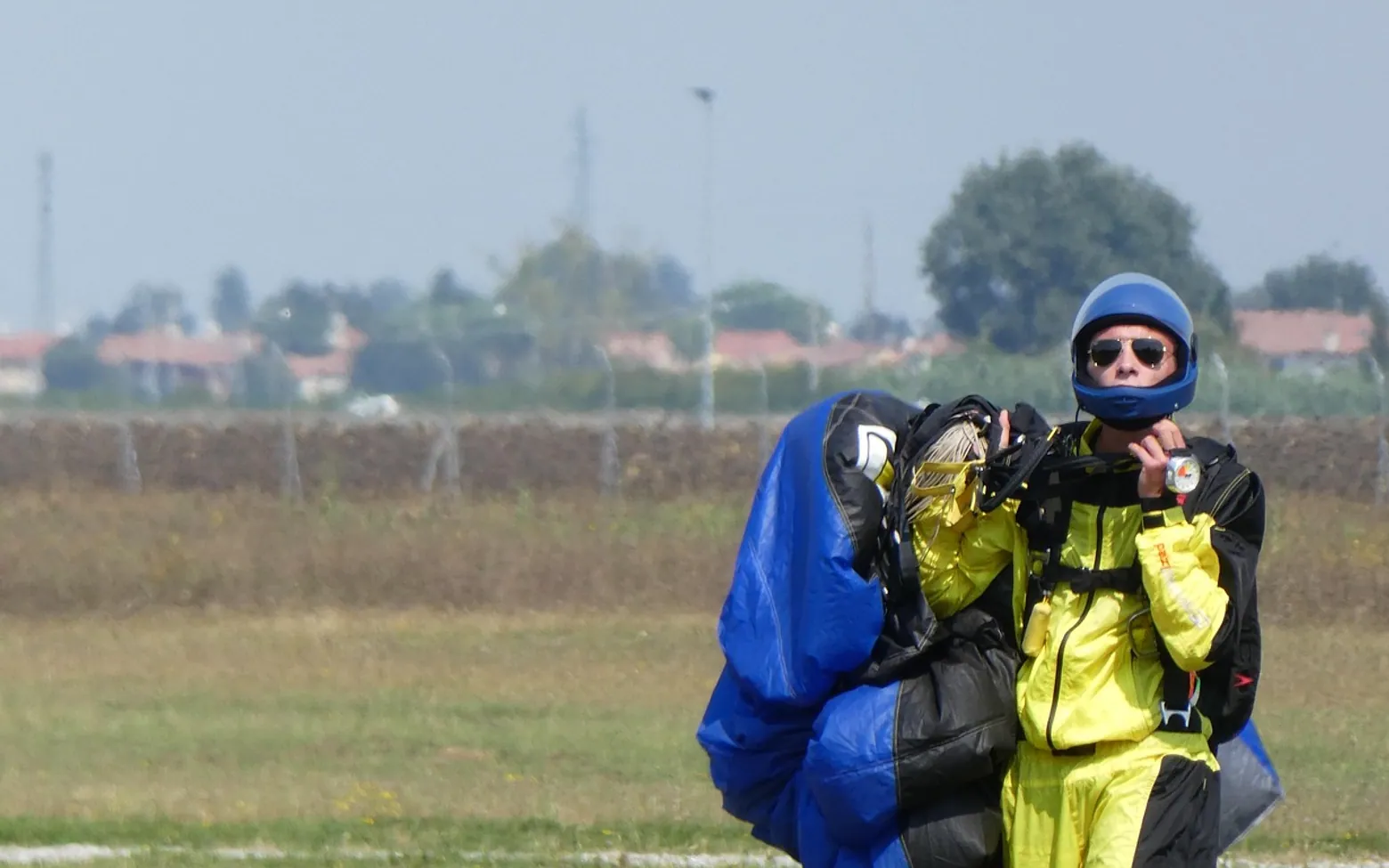
Goggles and helmet should be chosen as a pair. Open-face helmets usually need a separate goggle, so check that the strap sits comfortably over or under the shell and that the frame does not catch on the helmet's edge. Full-face helmets come with an integrated visor, which replaces goggles for many experienced jumpers. Browsing top-rated skydiving helmets alongside goggle options makes it easier to compare shapes and find a combination that feels secure and gives a clear, wide view.
Simple care habits
- Rinse dust and sand off with clean water rather than wiping them across the lens.
- Dry with a microfibre cloth and avoid touching the inside of anti-fog lenses.
- Store goggles in a soft case away from heat and heavy kit.
- Replace them when the foam hardens, the strap loses its stretch or scratches cloud the view.
Before every jump, check that your goggles are clean, snug and seated correctly, and follow the equipment guidance of your instructor or drop zone. Clear vision is part of flying safely, and it makes the view from the door all the more memorable.
Across the sections
Don’t miss these


Something to add?
We read every message.